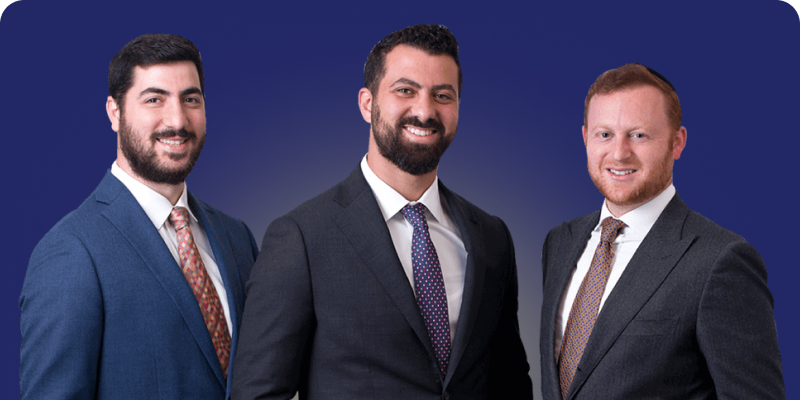
Protecting the Rights of Moreno Valley Workers

If your employer violated your rights at work, you need an employment lawyer who fights exclusively for employees. Abramson Labor Group represents workers in Moreno Valley and throughout California in cases involving wrongful termination, unpaid wages, workplace discrimination, sexual harassment, retaliation, and more. We work on contingency — you pay nothing unless we win.

Moreno Valley is the second-largest city in Riverside County, with a population of approximately 214,000 and a workforce of nearly 95,000 residents. Located at the intersection of the I-215 and SR-60 corridors, Moreno Valley has become one of the Inland Empire’s largest logistics and distribution hubs. Fortune 500 and international companies including Amazon, Skechers, Procter & Gamble, Harbor Freight Tools, Aldi, Deckers Outdoor, Medline, and Fisher & Paykel operate massive distribution centers throughout the city, many clustered near March Air Reserve Base and its adjacent inland port. Beyond logistics, the city’s economy includes healthcare, retail, education, construction, and public-sector employment.

Whether you work in a warehouse, a hospital, a retail store, a restaurant, on a construction site, or anywhere else in Moreno Valley, California law protects your rights. When those protections are violated, we hold employers accountable.

More than 35 years of combined experience. Over 500 five-star Google reviews. Five attorneys recognized by Super Lawyers and Rising Stars. A unanimous jury verdict in a retaliation case.

Call for a free consultation: (213) 493-6300


    Experiencing Workplace Issues?


    Fill out the form below for a free intake assessment. Abramson Labor Group works on a contingency basis, which means we don’t charge you fees unless we obtain a favorable verdict or settlement.

    Full Name

    Phone Number

    Email Address

    Brief Description

    Wrongful Termination

    California is an at-will state, but at-will does not mean your employer can fire you for any reason. Termination is wrongful when it is motivated by discrimination, retaliation for exercising a legal right, refusal to participate in illegal conduct, or a violation of public policy.

    You may have a wrongful termination claim if you were fired after reporting harassment or discrimination, after filing a workers’ comp claim, after taking medical or family leave, after requesting a disability or pregnancy accommodation, or after raising concerns about safety, fraud, or illegal activity. If the timing of your termination closely follows a protected activity and the stated reason doesn’t match your actual record, the law is on your side.

    Damages include back pay, front pay, emotional distress, punitive damages, and attorneys’ fees.


    Unpaid Wages and Overtime

    California requires time-and-a-half for work exceeding 8 hours in a day or 40 in a week, and double time for work exceeding 12 hours in a day. Every non-exempt employee is entitled to these protections regardless of job title, pay structure, or industry.

    Wage theft is widespread in Moreno Valley’s logistics-heavy economy. Warehouse and distribution workers on 10- and 12-hour shifts regularly see overtime miscalculated or unpaid. Timekeeping systems that round clock-in and clock-out times in ways that consistently favor the employer are common — and illegal if the rounding is not neutral over time. Time spent waiting in line for mandatory security screenings before or after shifts is compensable under California law but frequently goes unpaid. Construction workers paid flat daily rates that ignore overtime, and retail and food service workers performing off-the-clock tasks, face similar violations.

    When you are terminated, all wages owed — including accrued vacation — must be paid on the date of termination. Every day of delay triggers waiting time penalties of one full day’s wages, up to 30 days. We recover unpaid wages going back three years, plus penalties, interest, and attorneys’ fees.


    Meal and Rest Break Violations

    California law requires a 30-minute duty-free meal break before the end of your fifth hour, a second meal break before the end of your tenth hour, and a paid 10-minute rest break for every four hours worked. “Duty-free” means you must be completely relieved of all work responsibilities and free to leave the premises. Each denied break entitles you to one additional hour of pay at your regular rate.

    In Moreno Valley’s distribution centers, production quotas and throughput targets frequently make breaks impractical. AB 701 — California’s warehouse quota law, effective since January 2022 — requires employers with 100 or more warehouse employees to disclose all production quotas in writing and prohibits quotas that prevent compliance with meal breaks, rest breaks, or restroom access. If your employer’s quota makes it impossible to take your legally required breaks, both the quota and any discipline for failing to meet it are illegal.

    Break violations are equally common in healthcare, retail, food service, and construction throughout Moreno Valley — anywhere that understaffing or production pressure leads to breaks being skipped, shortened, or interrupted.


    Workplace Discrimination

    The California Fair Employment and Housing Act prohibits employment discrimination based on race, color, national origin, ancestry, sex, gender, gender identity, gender expression, sexual orientation, age (40 and older), disability, medical condition, genetic information, marital status, pregnancy, religion, and military or veteran status. FEHA applies to employers with five or more employees and provides broader protections than federal law.

    Moreno Valley is one of the most diverse cities in the Inland Empire — approximately 60 percent Hispanic, 17 percent Black, and 14 percent White. Discrimination can operate along multiple lines: national origin and language discrimination in warehouse and service-sector settings, race-based disparities in discipline and promotion, age discrimination targeting workers over 40 during layoffs, and pregnancy or disability discrimination when employers refuse accommodations or skip the interactive process. Patterns of unequal treatment — even without explicit statements — are sufficient to establish a claim.

    FEHA damages include back pay, front pay, emotional distress, and punitive damages. There is no cap.


    Sexual Harassment

    Sexual harassment in the workplace is illegal under California law. It includes unwelcome sexual advances, requests for sexual favors, and any verbal, physical, or visual conduct of a sexual nature that creates a hostile or intimidating work environment.

    When a supervisor is the harasser, the employer is strictly liable regardless of whether the company knew. When the harasser is a coworker or third party, the employer is liable if it knew or should have known and failed to take prompt corrective action. You do not need to report to HR before contacting an attorney. California’s Silenced No More Act (SB 331) prevents employers from using NDAs to silence employees about harassment, discrimination, or retaliation.


    Retaliation

    California law prohibits employers from retaliating against employees who exercise their legal rights. Protected activities include reporting wage violations, filing a discrimination or harassment complaint, taking medical or family leave, filing a workers’ compensation claim, refusing to participate in illegal activity, reporting safety concerns, and reporting illegal warehouse quotas under AB 701.

    Retaliation can take many forms beyond termination: reduced hours, a worse schedule, reassignment, exclusion from opportunities, sudden negative performance reviews, or a demotion framed as restructuring. When adverse action follows a protected activity and the employer’s stated reason doesn’t hold up under scrutiny, the law provides a remedy.

    Multiple statutes prohibit retaliation, including Labor Code § 1102.5 (whistleblower), FEHA (discrimination and harassment complaints), Labor Code § 98.6 (wage claims), Labor Code § 132a (workers’ comp), CFRA/FMLA (medical leave), and AB 701 (warehouse quota complaints). Damages include reinstatement, back pay, front pay, emotional distress, punitive damages, and attorneys’ fees.


    Warehouse and Distribution Workers

    Moreno Valley is one of the largest warehouse and logistics centers in Southern California. The Skechers distribution center alone spans 1.8 million square feet. Amazon operates multiple facilities in the area. Procter & Gamble runs a million-square-foot West Coast distribution hub near March Air Reserve Base. Harbor Freight, Aldi, Deckers, and Medline operate their own large-scale facilities.

    Workers in these distribution centers have specific protections under California law:

    AB 701 warehouse quotas. Employers with 100 or more warehouse employees must disclose all production quotas in writing. Quotas cannot prevent compliance with meal breaks, rest breaks, restroom access, or health and safety laws. Discipline for failing to meet an illegal quota is itself illegal.

    Temp agency joint liability. Many distribution centers staff operations through temporary staffing agencies. California Labor Code § 2810.3 makes the client employer — the warehouse — jointly liable for wage violations, safety violations, and workers’ compensation, regardless of which company signs your paycheck.

    Heat illness prevention. California’s indoor heat illness prevention standard (effective July 2024) requires employer action when indoor temperatures reach 82°F, with enhanced measures at 87°F. In the Inland Empire, where summer temperatures regularly exceed 100°F, warehouses without adequate cooling create dangerous conditions.

    Security screening time. If you are required to wait in line for a security checkpoint before or after your shift, that time is compensable under California law. In large distribution centers where hundreds of workers funnel through a single checkpoint, these screenings can add significant unpaid time to each shift.


    Exempt Misclassification

    Some Moreno Valley employers classify salaried workers as “exempt” from overtime. California requires both a minimum salary of $70,720 per year (2025) and that the employee spend more than 50 percent of their time on qualifying executive, administrative, or professional duties. If your actual work is primarily operational, technical, or non-supervisory — regardless of your title — you may be misclassified and owed years of unpaid overtime, meal break premiums, and rest break premiums.


    Veterans and Military Service Members

    March Air Reserve Base is one of Moreno Valley’s largest employers and anchors a significant veteran community. Federal law (USERRA) protects service members’ reemployment rights after deployment, prohibits employment discrimination based on military service, and requires employers to restore returning service members to the position they would have held. California’s Military and Veterans Code provides additional protections. If you were denied reemployment, lost seniority during service, or were penalized for military obligations, you have claims under both federal and state law.


    Immigration Status and Your Rights

    California law is explicit: every employment protection applies regardless of immigration status. Labor Code § 244 confirms this. Labor Code § 1019 makes it illegal for employers to threaten immigration enforcement as retaliation, carrying $10,000 penalties per violation. Labor Code § 1024.6 prohibits employers from demanding specific documents beyond I-9 requirements. We serve clients in Spanish and other languages.


    Workers’ Compensation

    Every employer in California must carry workers’ compensation insurance. If you are injured on the job — through a single accident or cumulative repetitive stress — you are entitled to medical treatment, temporary disability, permanent disability, and supplemental job displacement benefits, regardless of fault. Common Moreno Valley workplace injuries include back injuries from warehouse lifting, forklift collisions, crush injuries from falling merchandise, slip and fall injuries, repetitive stress from packing and sorting, and heat illness. Your employer cannot retaliate against you for filing a claim.


    Personal Injury

    Abramson Labor Group also represents Moreno Valley residents in personal injury cases, including vehicle accidents on the I-215, SR-60, and local roads, wrongful death, slip and fall injuries, and product liability. If another party’s negligence caused your injury, you may be entitled to compensation for medical expenses, lost income, and pain and suffering.


    How Our Firm Works

    Free consultation. You describe what happened. We identify the legal claims, explain your rights, and tell you what your case is worth. No cost. No obligation.

    Investigation. We gather pay records, personnel files, communications, witness statements, and other evidence to build a case grounded in facts and law.

    Resolution. We pursue the best outcome through negotiation, mediation, or trial. We have a unanimous jury verdict in a retaliation case and are prepared to take your case as far as necessary.

    Contingency only. You pay nothing unless we win. No retainer. No hourly fees. No upfront costs.


    Serving Moreno Valley and Western Riverside County

    Abramson Labor Group represents workers throughout Moreno Valley and the surrounding communities, including Sunnymead, Edgemont, Moreno Valley Ranch, March Air Reserve Base area, Centerpointe Business Park, SR-60 Corridor industrial area, Rancho Belago, TownGate, Stoneridge, Hidden Springs, and neighborhoods throughout the city. We also serve workers in Riverside, Perris, Lake Elsinore, Hemet, San Jacinto, Beaumont, and communities throughout western Riverside County.

    Our firm is headquartered at 1700 W Burbank Blvd, Burbank, CA 91506, and we represent employees in every county in California. Claims can be filed with the Labor Commissioner or directly in Riverside County Superior Court.


    Frequently Asked Questions

    How do I know if I have an employment case?

    If you were fired and the reason doesn’t add up, you’re not being paid correctly, you experienced discrimination or harassment, or you faced consequences after exercising a legal right, you may have a case. A free consultation is the fastest way to find out.

    How long do I have to file?

    Wage claims go back three years. Discrimination and harassment must be filed with the Civil Rights Department within three years. Workers’ comp claims are generally one year from the date of injury. PAGA claims have a one-year deadline. The sooner you act, the stronger your position.

    I work at a warehouse through a temp agency. Can I still file a claim?

    Yes. California law makes the company that controls the worksite — the warehouse — jointly liable for wage and hour violations, safety violations, and workers’ comp, regardless of which staffing agency signs your paycheck. We pursue claims against both.

    My warehouse has quotas that prevent me from taking breaks. Is that legal?

    No. AB 701 requires warehouse employers with 100+ employees to disclose quotas in writing and prohibits quotas that interfere with meal breaks, rest breaks, or restroom access. If you’ve been disciplined for failing to meet a quota that makes breaks impossible, both the quota and the discipline are illegal.

    I wait in line for a security screening after my shift but I’m off the clock. Is that legal?

    No. Under California law, time spent in mandatory security screenings — including waiting in line — is compensable. If your employer requires you to go through security before leaving but doesn’t pay you for that time, you have a claim for unpaid wages.

    Can I file a claim if I’m still employed?

    Yes. California law protects you from retaliation for exercising your rights. Many of our clients are still employed when they first contact us.

    What does it cost?

    Nothing unless we win. We work entirely on contingency. No retainer, no hourly fees, no costs out of pocket.


    Why Moreno Valley Workers Choose Abramson Labor Group

    We only represent employees. Never employers. Your interests are our sole focus.

    Proven results. More than 500 five-star Google reviews. Five Super Lawyers and Rising Stars. A unanimous jury verdict. Over 35 years combined experience.

    We know Inland Empire warehouses. Logistics, distribution, temp agencies, quotas, overtime, heat, misclassification — these are the claims Moreno Valley workers bring us, and they’re the cases we handle every day.

    We speak your language. We serve clients in Spanish and other languages.

    Zero cost unless we win. Contingency. No retainer. No hourly rate. No risk.


    Contact a Moreno Valley Employment Lawyer Today

    If your rights were violated at work, the first step is a phone call. Free. Confidential. No obligation. We listen, we evaluate your claims, and we tell you honestly what your case is worth and how we can help.

    Phone: (213) 493-6300 Address: 1700 W Burbank Blvd, Burbank, CA 91506 Hours: Monday – Friday, 9:00 AM – 6:00 PM Website: abramsonlaborgroup.com

    Free consultations. No fees unless we win. Serving Moreno Valley, western Riverside County, and all of California.