

- Nonexempt construction workers earn overtime after 8 hours in a workday or 40 in a workweek, and double time after 12 hours in a day.
- On public works projects, contractors and subcontractors must pay at least the prevailing wage.
- A 1099 does not make you an independent contractor. California’s ABC test presumes you are an employee.
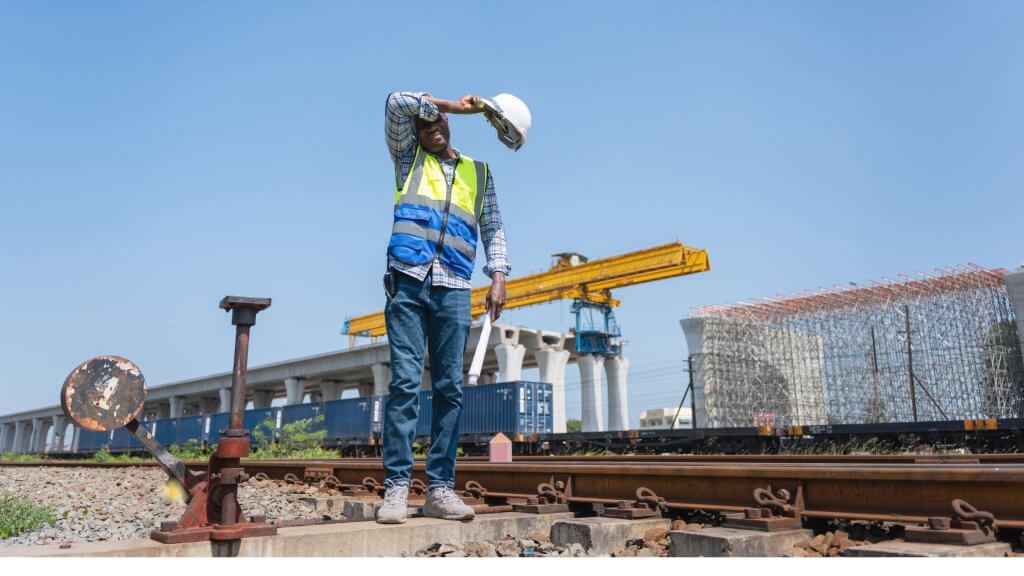
- Outdoor employers must provide water, shade above 80 degrees Fahrenheit, cool-down rest, and heat illness training.
- Workers’ compensation covers job injuries and illnesses, including heat illness, without proving the employer was at fault.
California construction workers have legal protections for their pay, their breaks, and their safety on the job site. Abramson Labor Group represents union and non-union tradespeople, day laborers, apprentices, and foremen, never employers. Our case reviews are free and confidential, and we work on contingency.

“Call us for a Free Case Review. We Only Get Paid If You Win”
Why Construction Workers Choose Abramson Labor Group
- Employees only. We represent workers, never contractors or developers.
- 4.5 stars across more than 1,900 Google reviews (as of September 2026).
- Documented results. See our case results. Past results do not guarantee a similar outcome.
- Founding partner Zev Abramson founded the firm in 2015 and earned his J.D. at Loyola Law School.
- Help in English and Spanish, with intake also available in Armenian.
When Do Construction Workers Earn Overtime?
Nonexempt employees earn at least one and a half times their regular rate for work over eight hours in a workday or over 40 hours in a workweek, and for the first eight hours on a seventh straight day of work. Work over 12 hours in one day earns double time (Labor Code 510). Union agreements can change some of these rules, so the details depend on your job. Our wage and overtime page explains how these claims work.
On public works, the contractor and any subcontractor must pay not less than the specified prevailing wage rates to workers on the project (Labor Code 1774).
Being paid in cash does not remove these rights. Time on site under the employer’s control counts as hours worked, including “all the time the employee is suffered or permitted to work, whether or not required to do so” (IWC wage order definition).
Am I an Employee or an Independent Contractor?
Being handed a 1099 does not settle it. Under California’s ABC test, a person paid for labor or services is an employee unless the hiring entity shows the worker is free from its control, does work outside its usual course of business, and is customarily engaged in an independent business of the same kind (Labor Code 2775). Some occupations follow different tests. Learn more about independent contractor misclassification.
When a company gets workers through a labor contractor to do work in its usual course of business, it can share “all civil legal responsibility and civil liability” with the contractor for unpaid wages and for failing to carry workers’ compensation coverage (Labor Code 2810.3). Small businesses and government employers are excluded.
- Long days with no overtime pay
- Breaks skipped to keep the job on schedule
- A 1099 for work the company directs and controls
- Less than the prevailing wage on a public project
- No water, shade, or cool-down rest on hot days
- Threats or a layoff after you reported a hazard or an injury
What Meal and Rest Breaks Do Construction Workers Get?
An employer cannot employ someone for more than five hours a day without a meal period of at least 30 minutes, or more than 10 hours without a second one, with limited waivers for shorter days (Labor Code 512). Rest periods are a net 10 minutes for each four hours worked “or major fraction thereof,” and they are paid (DLSE rest period FAQ). When a required break is not provided, the employer owes “one additional hour of pay at the employee’s regular rate of compensation” for each workday (Labor Code 226.7). See our guide to meal and rest break requirements.
What Heat Safety Rules Apply on Construction Sites?

California’s heat illness standard applies “to all outdoor places of employment,” and construction is one of the industries that must also follow its high-heat procedures (Cal. Code of Regulations, title 8, section 3395).
| Requirement | What the standard says |
|---|---|
| Water | Enough to provide “one quart per employee per hour for drinking for the entire shift” |
| Shade | “Shade shall be present when the temperature exceeds 80 degrees Fahrenheit” |
| Cool-down rest | Workers may “take a preventative cool-down rest in the shade when they feel the need to do so” |
| Training | Required for “each supervisory and non-supervisory employee” before work that may expose them to heat |
| High heat | Extra procedures for construction and other listed industries at 95 degrees Fahrenheit or higher |
Source: 8 CCR 3395.
If you were hurt or became ill on the job, including from heat, workers’ compensation applies “without regard to negligence” to an injury “arising out of and in the course of the employment” (Labor Code 3600). Our workers’ comp benefits overview explains what you may be owed.
Can I Be Punished for Reporting a Hazard or an Injury?
No. “A person shall not discharge an employee or in any manner discriminate, retaliate, or take any adverse action” against an employee for complaining about unpaid wages or other rights the Labor Commissioner enforces (Labor Code 98.6). Reporting a reasonably suspected violation of law to a supervisor or an agency is also protected (Labor Code 1102.5). See our retaliation page, and read about being fired for filing workers’ comp.
These rights apply regardless of immigration status, except reinstatement remedies barred by federal law (Labor Code 1171.5).
How Long Do I Have to Act?
Different claims have different deadlines. For many harassment, discrimination, and retaliation claims under FEHA, an employee generally has three years from the date they were last harmed to begin the filing process with the California Civil Rights Department. Wage claims and workers’ comp claims follow their own rules. An employment attorney can evaluate which deadlines apply to you.
Serving Construction Workers Across California
We represent construction workers in Burbank, Glendale, Pasadena, and across Los Angeles County, and statewide through our California employment lawyers.
Frequently Asked Questions
How much does a lawyer for construction workers cost?
We work on contingency, so you do not pay anything unless we win. The case evaluation is free. Our fee is a share of any recovery, and if there is no recovery, you owe no attorney fees.
Can I file workers’ comp for heat exhaustion?
Possibly. Workers’ comp covers injuries and illnesses arising out of and in the course of employment, without proving fault (Labor Code 3600). Whether a heat illness qualifies depends on the medical facts.
I was paid in cash. Do I still have rights?
Yes. How you are paid does not decide whether you are an employee or whether you are owed overtime. The ABC test looks at the actual working relationship (Labor Code 2775).
Do union workers have these rights too?
Generally, yes, but a collective bargaining agreement can change some overtime and break rules. An employment attorney can review how your agreement applies.
Request a Free Case Review
If something is wrong with your pay, breaks, classification, or safety on the job site, we can review what happened and explain your options. Request your free case evaluation, contact us, or call us at (213) 493-6300.
You do not pay ANYTHING unless we win!
Last updated: October 2026
This page is general information about California law, not legal advice. Every situation is different. For advice about your specific case, talk to a licensed California employment attorney.